Weekly summary of the War on Gaza, October 23, 2026
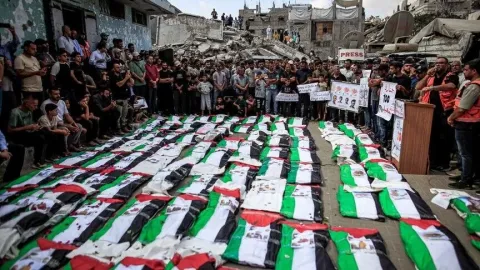
Caption: The bodies of 75 Palestinians, uncovered from under the rubble, was laid to rest in Gaza over the past week.
Daily Death Tolls:
• On October 16 and 17, 6 Palestinians were killed by Israeli fire in Gaza and 48 others were injured.
• On October 18, 2026, 7 Palestinians were killed by Israeli fire across the Gaza Strip including one who was uncovered from under the rubble, and 25 others were injured.
• On October 19, 2026, 5 Palestinians were killed by Israeli fire across the Gaza Strip including one who was uncovered from under the rubble and 22 others were injured.
• On October 21, 2026, 7 Palestinians were killed by Israeli fire in Gaza and 24 others were injured.
• On October 22, 2026, 4 Palestinians were killed by Israeli fire including one who died of earlier injuries and 12 others were injured.
Total Death Tolls:
• Since the ceasefire agreement went into effect in Gaza on October 10, 2025, 1538 Palestinians have been killed, and 5489 have been injured, and 841 bodies have been uncovered from under the rubble of their homes.
• The number of Palestinians killed since October 7, 2023, has reached 74,498 with 175,616 injured.
• The Ministry of Health in Gaza said a child died of cancer in Gaza over the past week and oils needed to run generators have run out.
• Israel expanded the yellow line near Al-Maghazi over the past week.
• Starting from this week, the weekly update will also highlight a pressing issue in Gaza and how Palestinians in Gaza deal with it. This week we will start with the issue of water.
• World Food Program said that "Funding cuts forced it to drastically reduce lifesaving assistance in Gaza."
- Prior to the genocide, 97% of Gaza’s water was unfit for human consumption.
- After the genocide in 2023, 87% of water resources have been destroyed.
- Palestinians depend heavily on purified and processed water to drink. This water costs money.
- People living in displacement encampments face the most difficulty as there is no infrastructure for water there. They have to buy water or they just wait for donated water to drink.
- The same applies for taking a shower. People had to take their showers with them to tents and sometimes, if using a public shower or toilet, the line is too long. There is no privacy. When there is no municipal water, due to the lack of electricity or water at all, people wait longer before they can have a shower. This explain the spread of skin diseases. When you take a shower, remember the people of Gaza.