Weekly summary of the War on Gaza, November 20, 2026
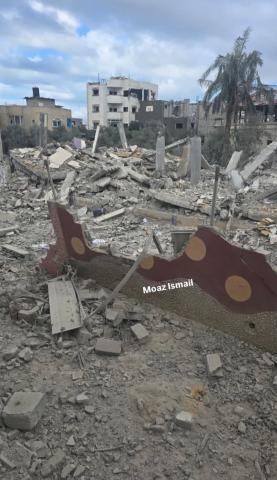
Caption: Israeli quadcopters have repeatedly dropped off explosives to the east of Al-Maghazi, causing further destruction to Palestinian homes.
Daily Death Tolls:
• On November 20 and 21, 2026, 9 Palestinians were killed by Israeli fire in Gaza and 55 others were injured.
• On November 22, 2026, 6 Palestinians were killed by Israeli fire across the Gaza Strip, including two who were uncovered from under the rubble and 33 others were injured.
• On November 23, 2026, 4 Palestinians were killed by Israeli fire across the Gaza Strip including one who died of earlier injuries and 7 others were injured.
• Israeli airstrikes continued in Gaza on November 24, 25 and 26, but for technical reasons, it seems, the statistics were not shared by the Minister of Health in Gaza.
Total Death Tolls:
• Since the ceasefire agreement went into effect in Gaza on October 10, 2025, 1679 Palestinians have been killed, and 6100 have been injured, and 851 bodies have been uncovered from under the rubble of their homes.
• The number of Palestinians killed since October 7, 2023, has reached 74,746 with 176,234 injured.
• In October, 2026, 6745 Palestinians were born in Gaza, 218 per day, the highest birth rate recorded in Gaza ever.
•The Ministry of Health in Gaza issues an epidemic warning about the high rates of meningitis and the repercussions of the deterioration of water and sanitation infrastructure in the Gaza Strip. 272 cases were recorded in October, compared to 30-50 cases in the previous months.
• The weekly update will also highlight a pressing issue in Gaza and how Palestinians in Gaza deal with it. This week UNRWA’s work will be explained.
• UNRWA still operate in Gaza on a limited capacity, such as running clinics and schools, and providing limited sanitation and water services.
• UNRWA issues security warnings for staff to avoid certain areas to be targeted by the Israeli military following warnings from Israel.
• Palestinians in Gaza are still dependent on UNRWA for primary care, where they go to UNRWA clinics to get their medical pills such as people suffering from chronic illness.
• UNRWA helped recently with recycling 4860 seats for students who attend UNRWA schools.
• UNRWA does not get involved in distributing aid in Gaza as much of this is done by the UN itself of international NGOs.
• Due to funding issues, UNRWA has laid off all its staff who left Gaza during the genocide, and there are internal protests against UNRWA ending the contracts of thousands of workers.